Section 3: Elevated
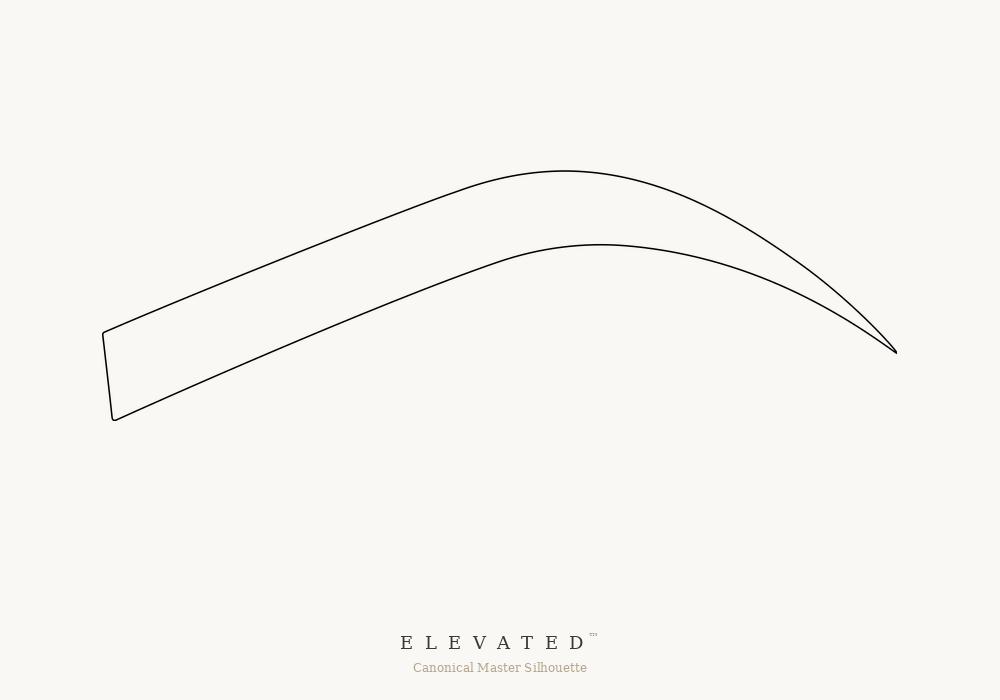
Model Overview
The Elevated model exists to solve a specific structural problem: faces that require vertical energy to achieve balance. It is not a dramatic style choice or an aesthetic preference. It is a diagnostic response to anatomy that reads as heavy, compressed, or downward-pulling without intentional lift at the brow.
Where Classic provides neutrality and Soft Harmony offers integration, Elevated delivers altitude. The apex in this model is not decorative — it is functional. It holds position because the underlying structure demands it. Without this lift, certain faces appear tired, stern, or older than they are. The Elevated model corrects this without overcorrection.
Practitioners who deploy Elevated carelessly — applying lift where none is needed — create results that read as surprised, theatrical, or artificially enhanced. The model requires precise diagnostic indication. When that indication exists, the result appears inevitable rather than imposed.
Visual & Flow Philosophy
The Elevated silhouette is characterised by progressive verticality. Stroke direction through the bulb begins with moderate lift, intensifies through the body, and converges at the arch zone. Unlike Classic's parallel flow, Elevated permits — and requires — controlled convergence toward the apex.
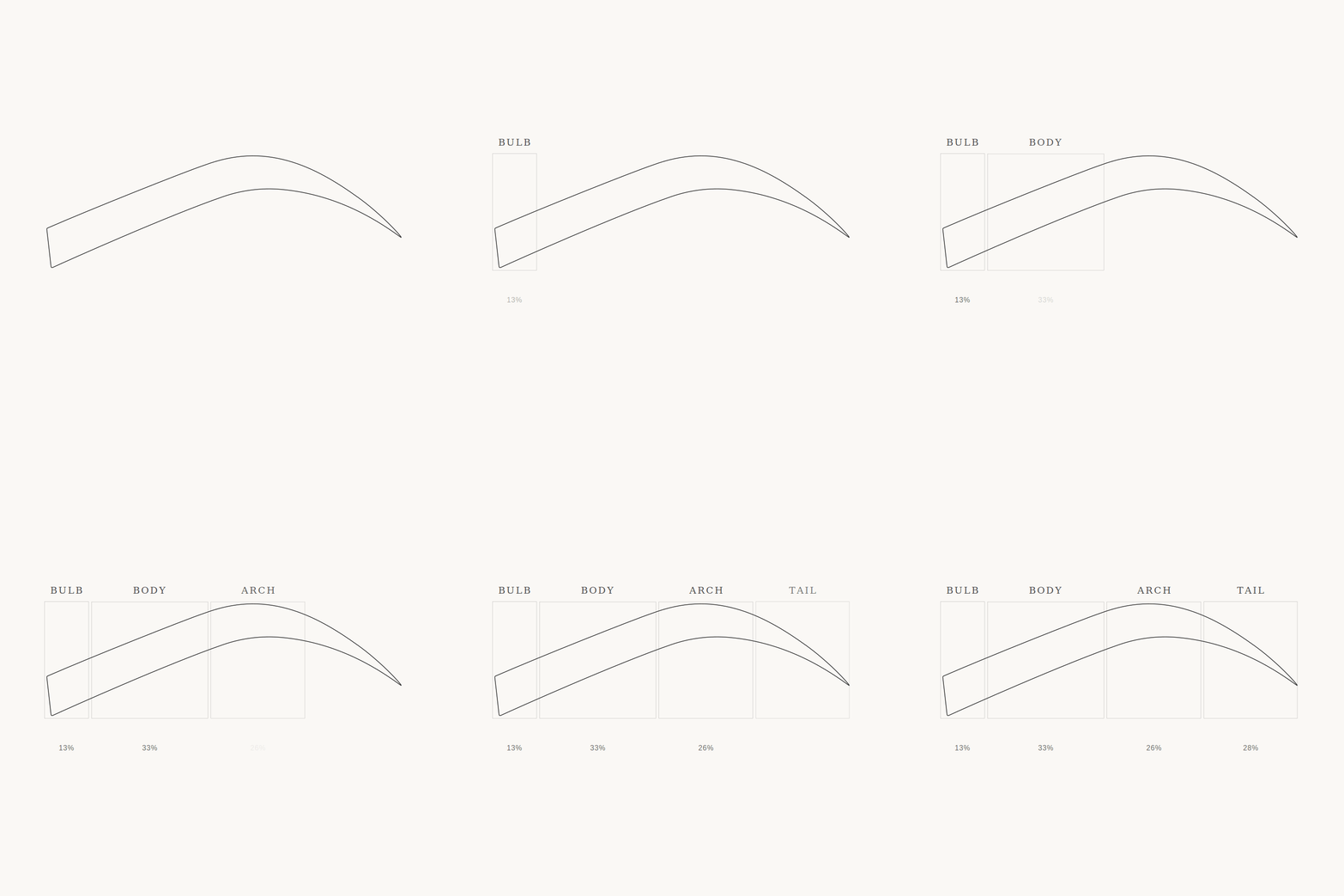
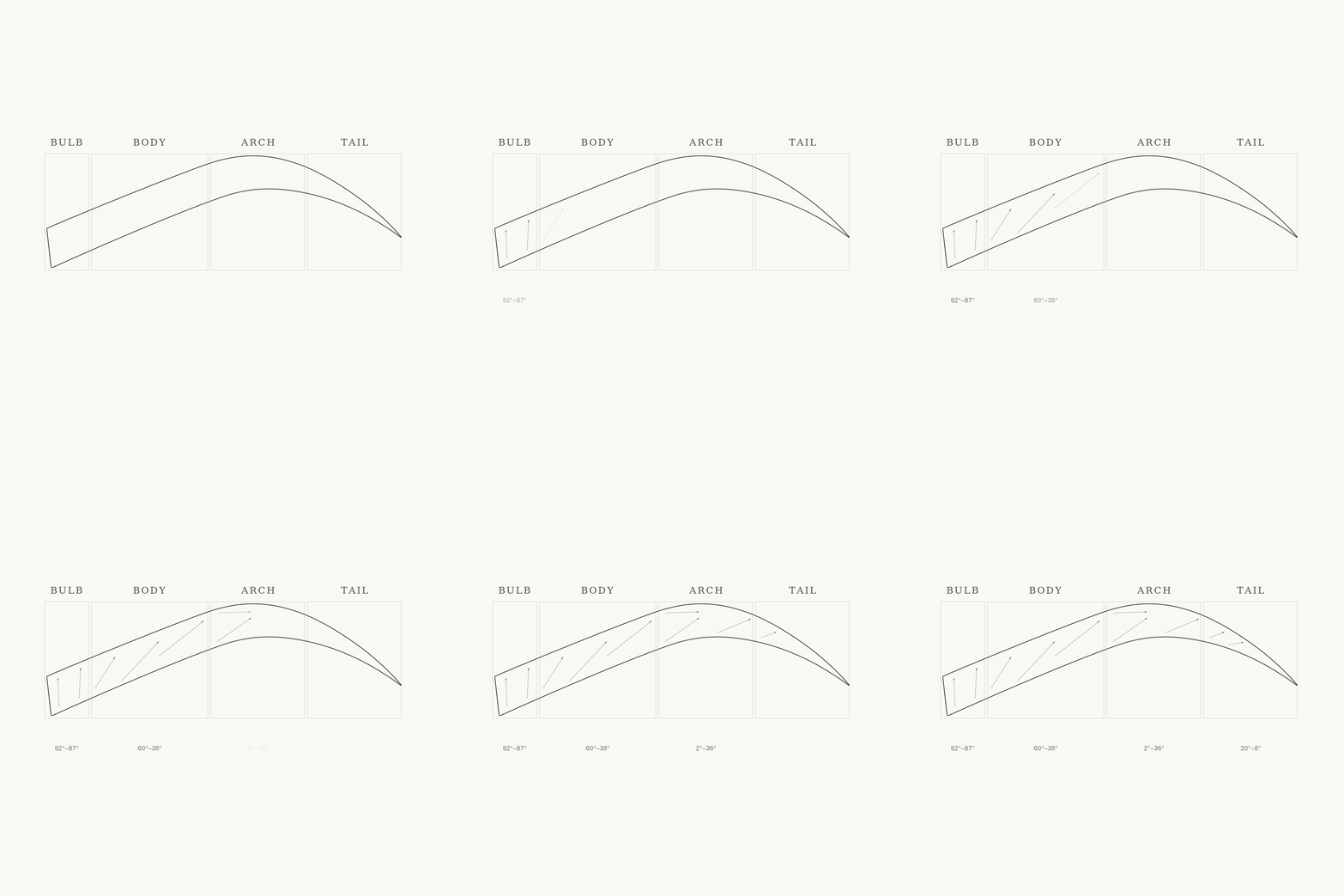
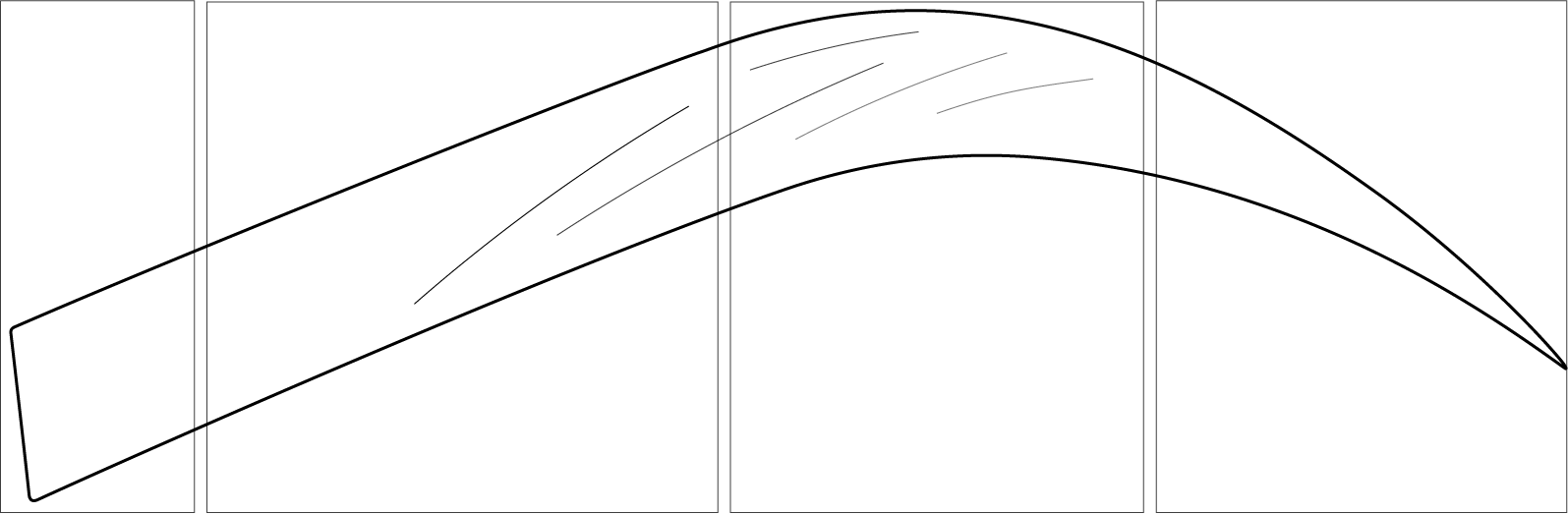
The arch zone in Elevated execution is an event. There is a visible apex — a point where the brow reaches its highest position before descending toward the tail. This is not a sharp peak or an angular break. It is a structured culmination of the lift energy that has been building through the preceding zones.
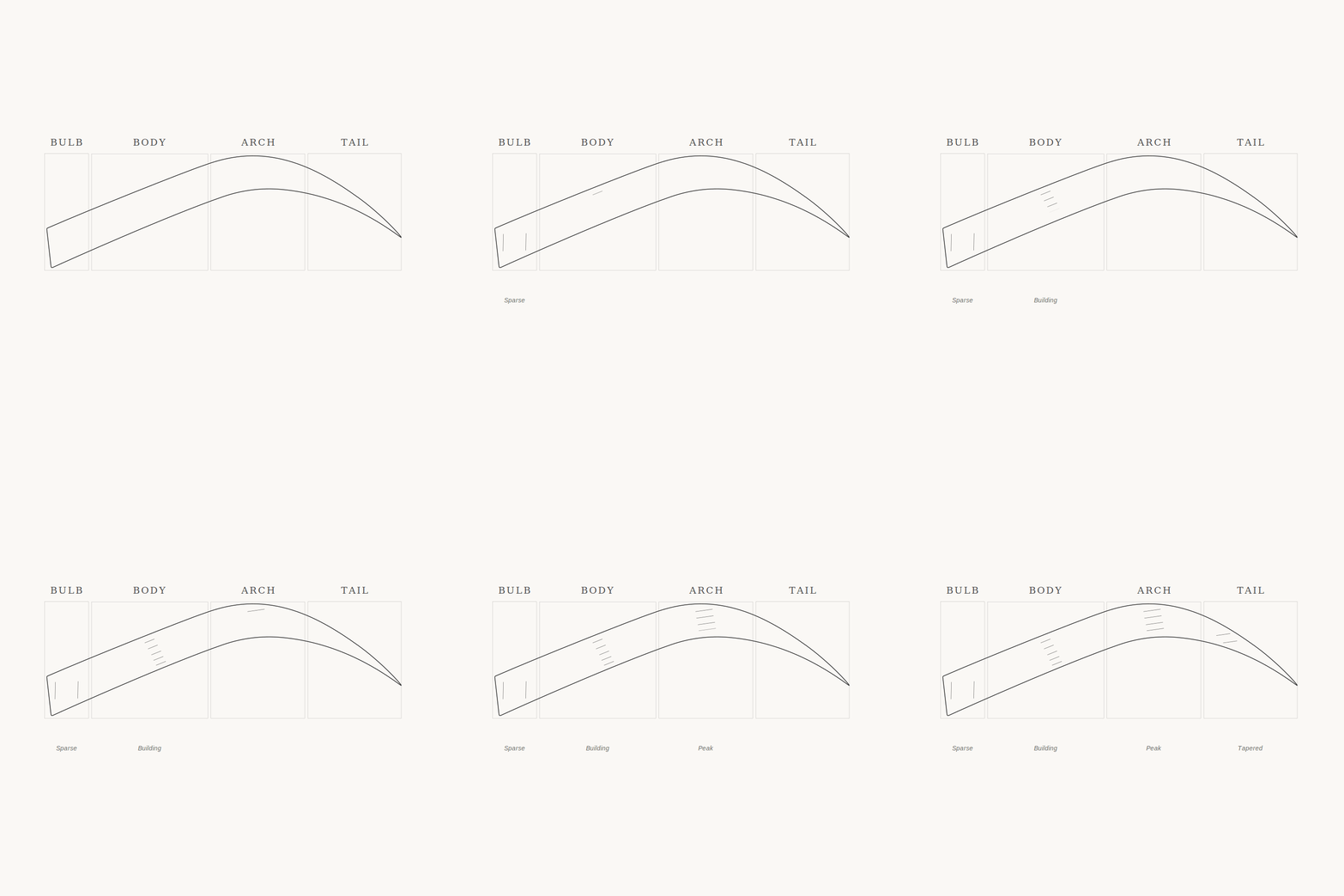
Density in the Elevated model supports structure. The body zone carries increased density to anchor the lift visually. The arch zone maintains sufficient weight to hold the apex position. The tail resolves with controlled reduction — not the gradual fade of Classic, but a more deliberate termination that preserves the architectural intent.
When the Model Works Best
Hooded or Heavy Lids
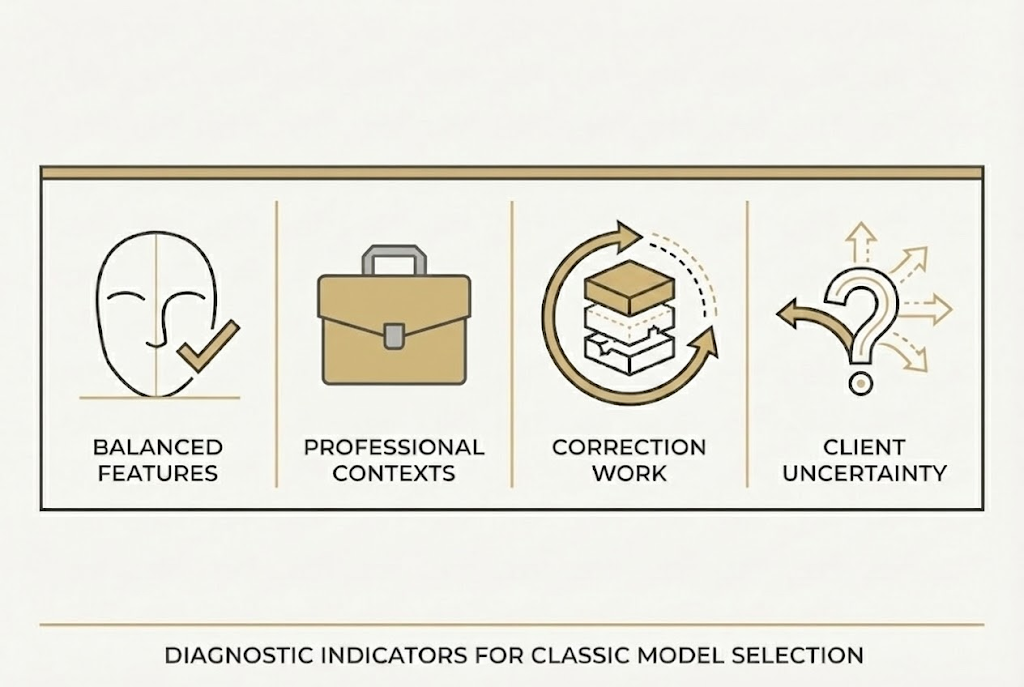
The Elevated model is diagnostically indicated when the upper lid creates visual weight that pulls the eye area downward. Clients with hooded lids benefit from the lift energy that counteracts this heaviness. The apex creates vertical space that opens the eye without surgical intervention.
Low-Set Brow Position
Some clients present with brows that sit lower on the orbital bone than typical. This positioning can create an appearance of fatigue or intensity that does not reflect the client's actual state. Elevated execution raises the apparent position of the brow, creating balance without altering the underlying bone structure.
Upper-Face Compression
Faces where the forehead-to-eye proportion reads as compressed benefit from the vertical energy of Elevated. The lift creates visual space, elongating the upper face and producing proportional balance that was previously missing.
Age-Related Descent
As tissue loses elasticity, brows can migrate downward over time. The Elevated model addresses this descent by engineering lift into the permanent structure. The result counteracts the visual effects of gravity without appearing to fight against natural aging.
How the Model Is Worn
In daily wear, the Elevated brow presents as alert and open. It does not read as surprised or artificially lifted — it reads as structurally correct for the face it serves. This distinction requires precise calibration. Too much lift creates theatricality. Too little fails to solve the diagnostic problem.
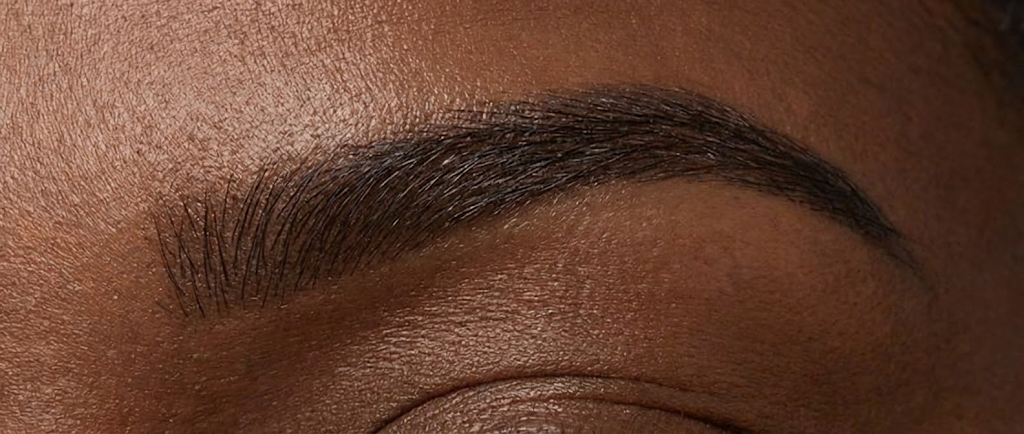
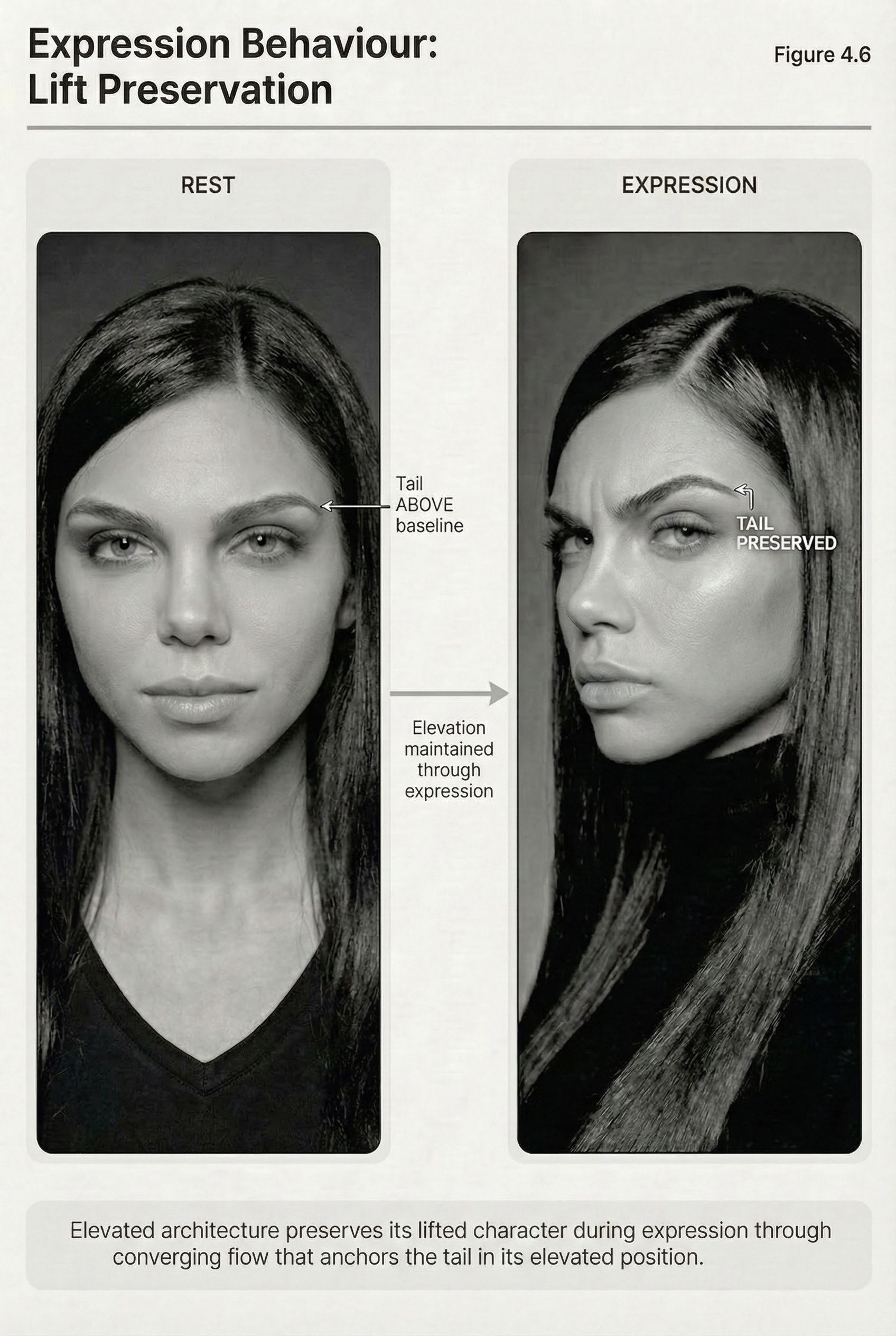
Expression behaviour is a critical consideration. The Elevated brow must maintain its structural intent through facial movement. When the client raises their brows, the apex should lift proportionally. When they furrow, the structure should compress without collapsing. The architecture persists across emotional states.
Longevity in Elevated execution depends on appropriate density placement. Because the model relies on structural support rather than mere pigment presence, the body and arch zones must carry sufficient density to maintain the lift over time. Underdensity leads to apex drift — the gradual loss of the structural peak that defines the model.
This is why Elevated work requires confidence in diagnosis. The model solves real problems for appropriate candidates. Applied incorrectly, it creates new problems that are difficult to correct.
Understanding Variations
Within the Elevated model, calibration responds to the degree of lift required and the facial context receiving it. These are not separate styles — they are diagnostic responses to varying degrees of the same underlying indication.
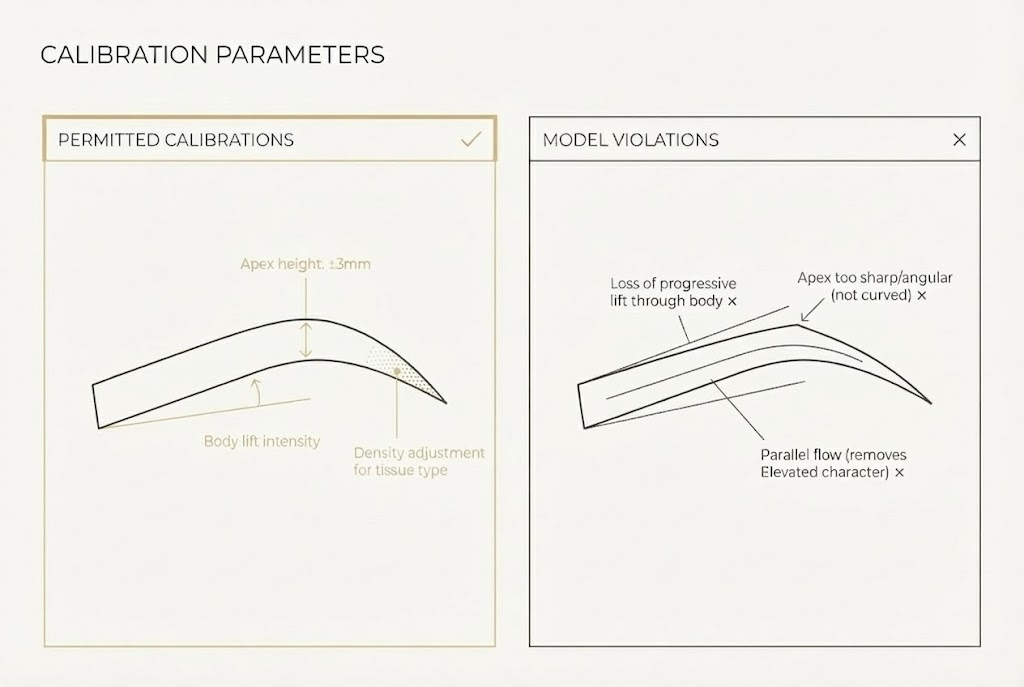
Moderate Lift
Appropriate when the diagnostic indication is present but not severe. The apex is visible but not pronounced. The body zone carries lift energy without aggressive verticality. This calibration suits clients who need opening without drama.
Pronounced Lift
Indicated when significant vertical energy is required to achieve balance. The apex holds a higher position. The body zone demonstrates clear progressive lift. This calibration addresses more substantial hooding, lower brow position, or greater upper-face compression.
Calibration by Tissue Type
Skin elasticity and tissue density affect how Elevated execution performs over time. Thicker skin requires more structural density to maintain lift. Thinner or more elastic tissue may need reduced density to prevent migration. The calibration responds to the canvas, not just the diagnostic indication.
Transitioning Between Models
Understanding Elevated in relation to other models clarifies when to select it and when alternatives serve better.
From Classic to Elevated
The transition introduces controlled convergence and apex presence. Where Classic maintains parallel flow, Elevated permits strokes to angle toward a structural peak. Where Classic resolves through gradual transition, Elevated builds toward a visible culmination.
From Elevated to Expressive
Moving toward Expressive adds personality to the structural lift. The apex may gain additional character. Density distribution becomes less uniform. The brow begins to communicate rather than simply correct.
When Elevated is Not Indicated
Faces with naturally high brow position, prominent orbital bones, or existing vertical energy do not benefit from Elevated. Applying lift where none is needed creates results that read as surprised, harsh, or artificially enhanced. The model exists to solve specific problems — it should not be deployed as a default or aesthetic preference.
Elevated is a diagnostic tool. It addresses vertical deficiency with vertical structure. When the indication is present, the result appears natural and necessary. When the indication is absent, the result appears imposed and artificial. Accurate diagnosis precedes successful execution.