Section 4: Expressive
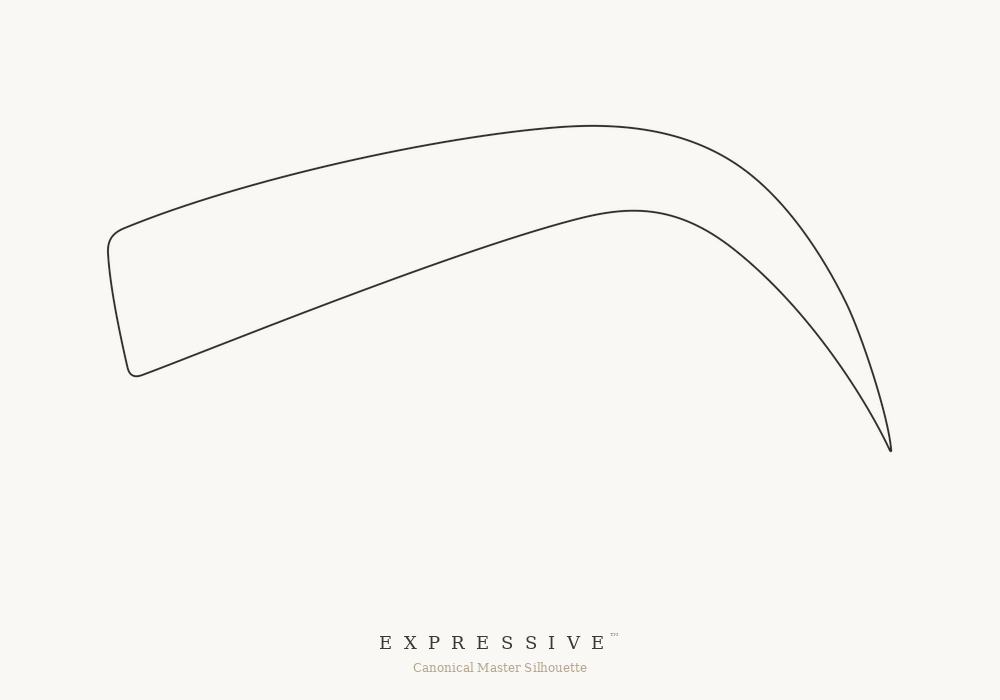
Model Overview
The Expressive model treats the brow as a dynamic participant in facial communication, not a static structure that resists expression. It is designed for faces that speak through their brows — clients whose natural communication style involves significant brow movement and whose personality is reflected in their facial animation.
Where Classic provides neutrality and Elevated delivers structural correction, Expressive celebrates the brow's role in emotional expression. The medial zone in this model carries deliberate weight because that is where expression originates. The bulb becomes an anchor for the communicative energy that flows outward through the rest of the brow.
Practitioners who deploy Expressive without understanding its communicative logic create results that appear heavy, unbalanced, or disconnected from the face's natural movement patterns. The model requires clients whose faces actively use the brow as an expressive instrument. When that alignment exists, the result amplifies rather than imposes.
Visual & Flow Philosophy
A note on tail position: The standard structural rule across brow design is that the tail should terminate at or above the level of the brow head. The Expressive model is the one context within the VELONÉ system where this rule may be deliberately relaxed. Because the model is built around progressive release from the medial zone, the tail can sit slightly below the head baseline when the client's facial anatomy and expression pattern call for it. This is not a default — it is a diagnostic decision that the practitioner must be able to justify. Without clear reasoning, a dropped tail reads as an error, not a choice.
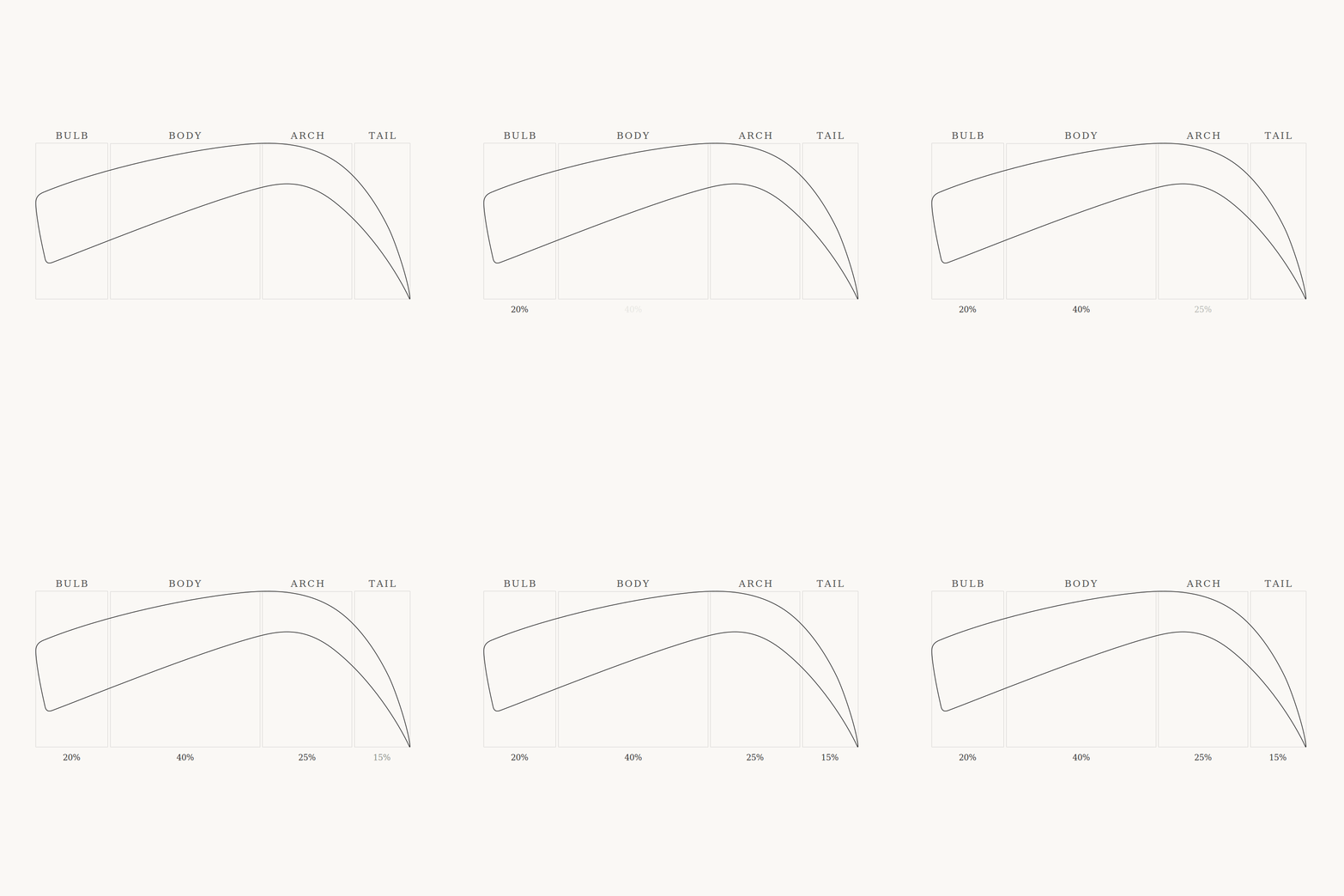
Weight concentrates at the bulb and progressively diminishes toward the tail. The medial zone carries the visual anchor; the body serves as a transitional passage; the tail resolves with minimal presence.
Arch Character
The arch zone is soft, not absent. There is curvature, but it does not compete with the medial emphasis. The arch facilitates the transition from the weighted bulb to the releasing tail. It is a passage, not a destination. This distinguishes Expressive from Elevated, where the arch is the structural event.
Flow Pattern
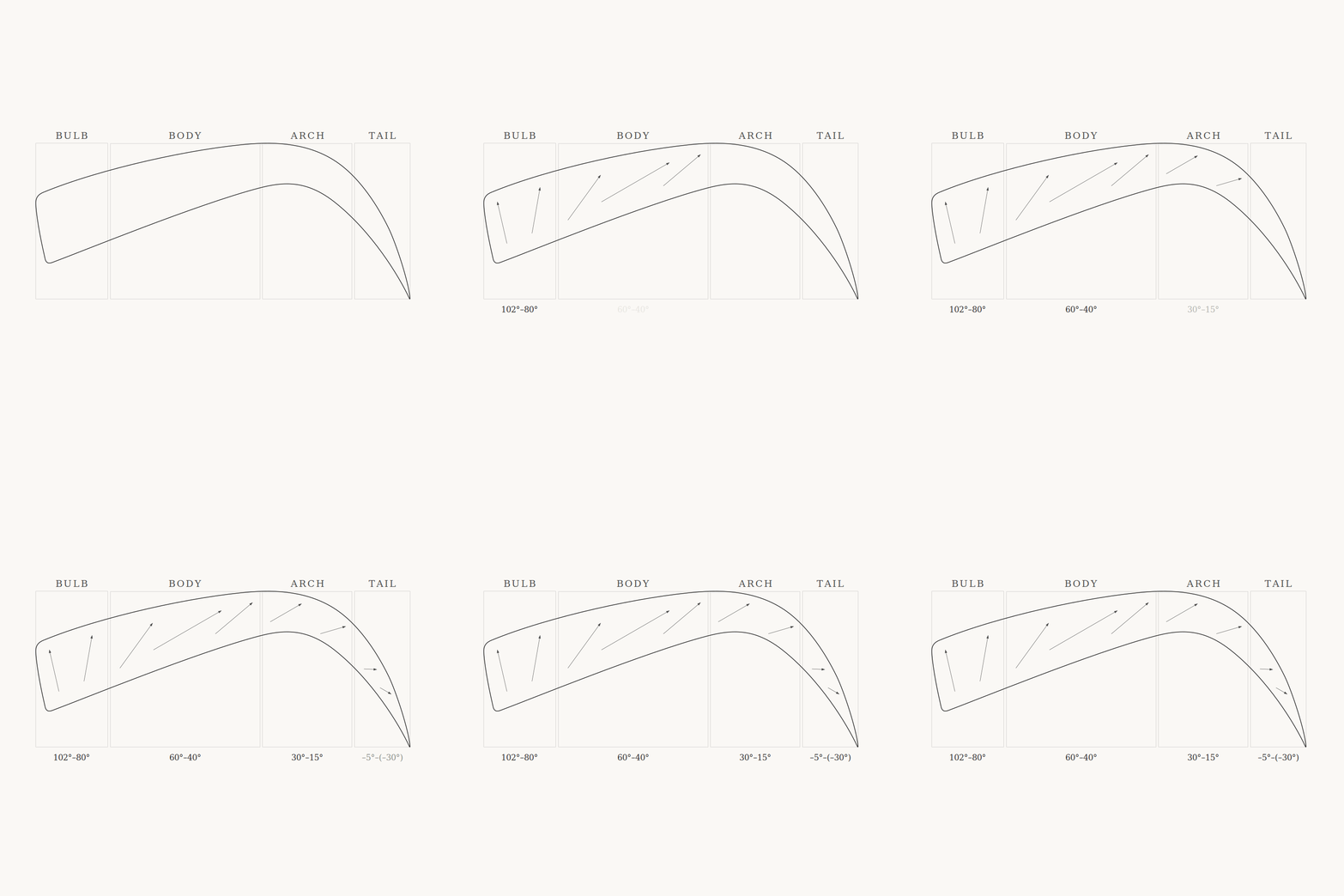
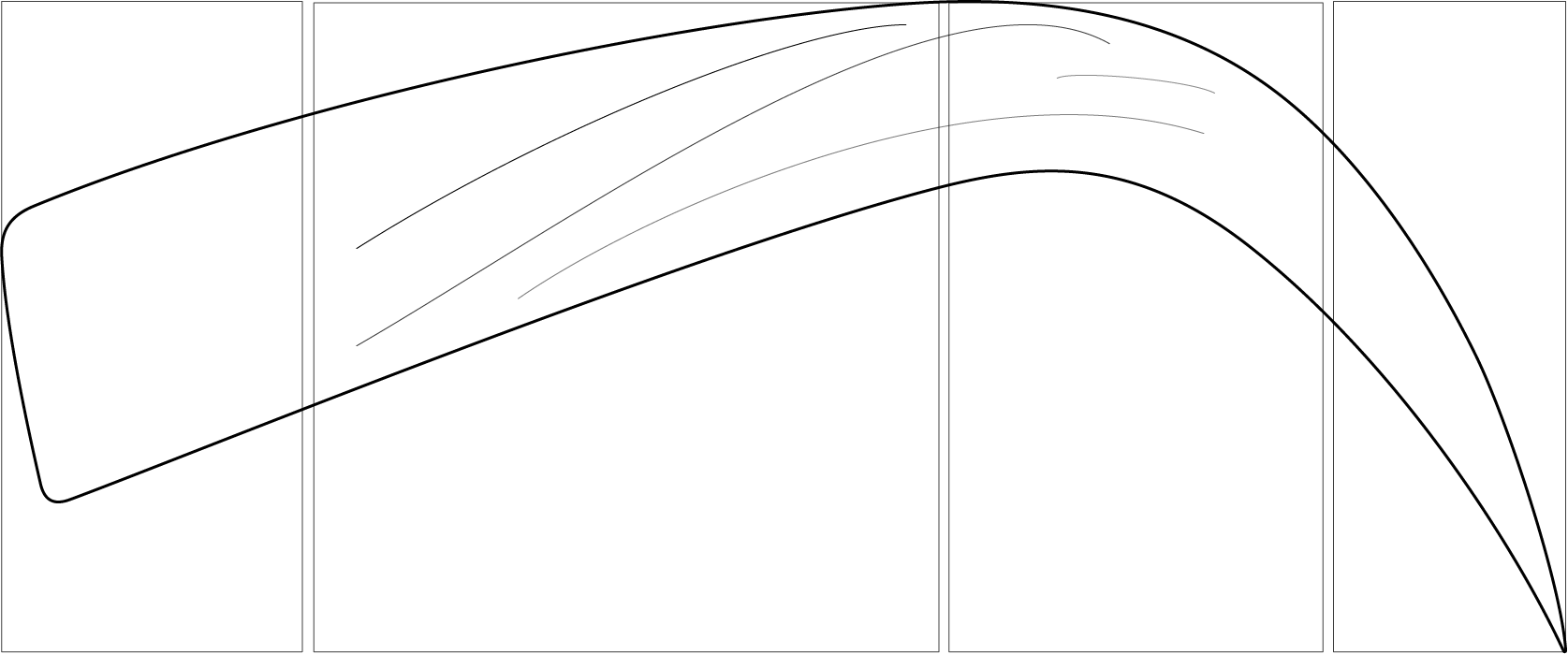
Density Behaviour
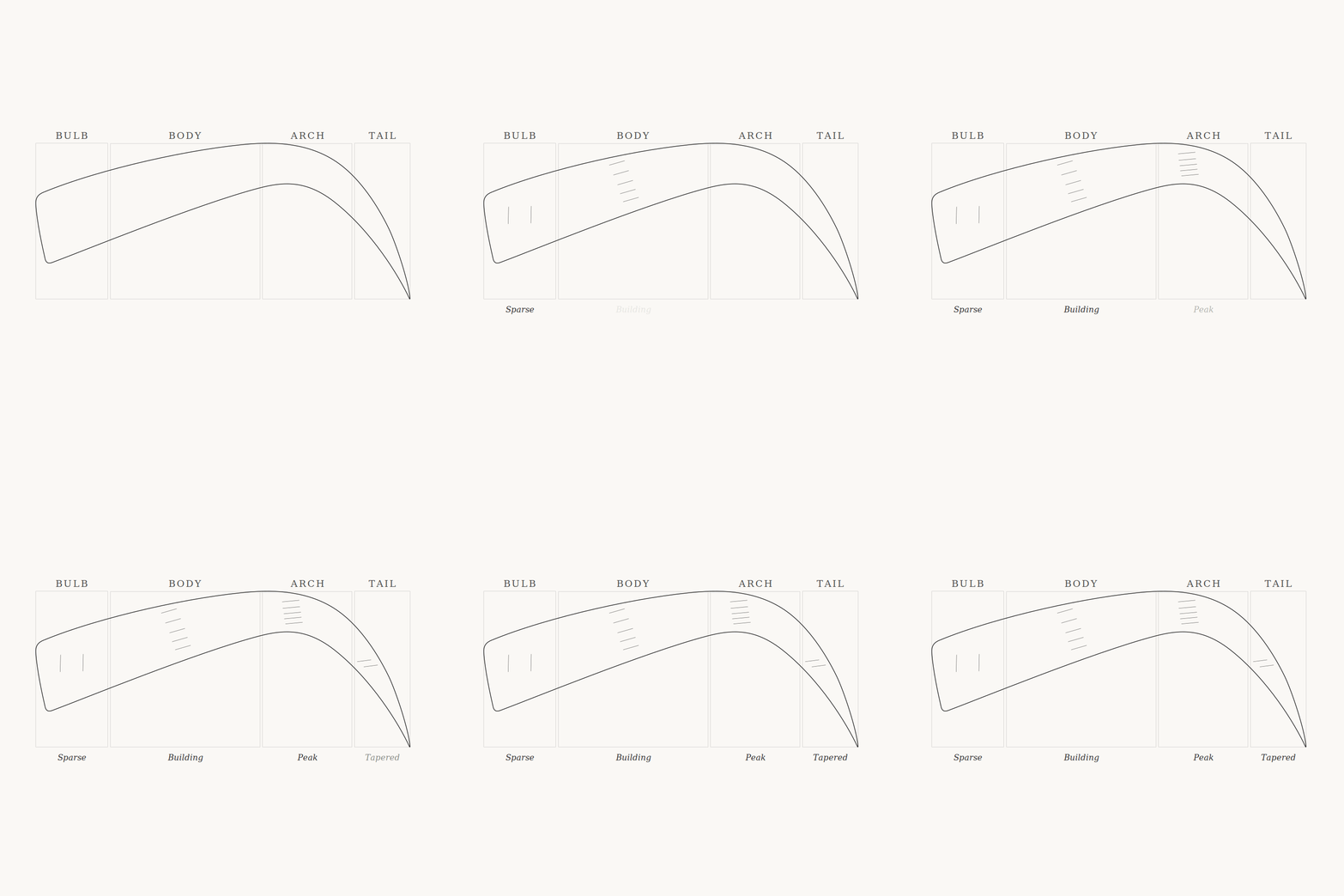
Density is front-loaded. The bulb carries the visual weight that anchors the entire structure. The body zone is a transitional passage where density progressively reduces. The tail resolves with minimal density, enough to complete the silhouette but not enough to compete with the medial emphasis.
When the Model Works Best
Active Brow Communicators
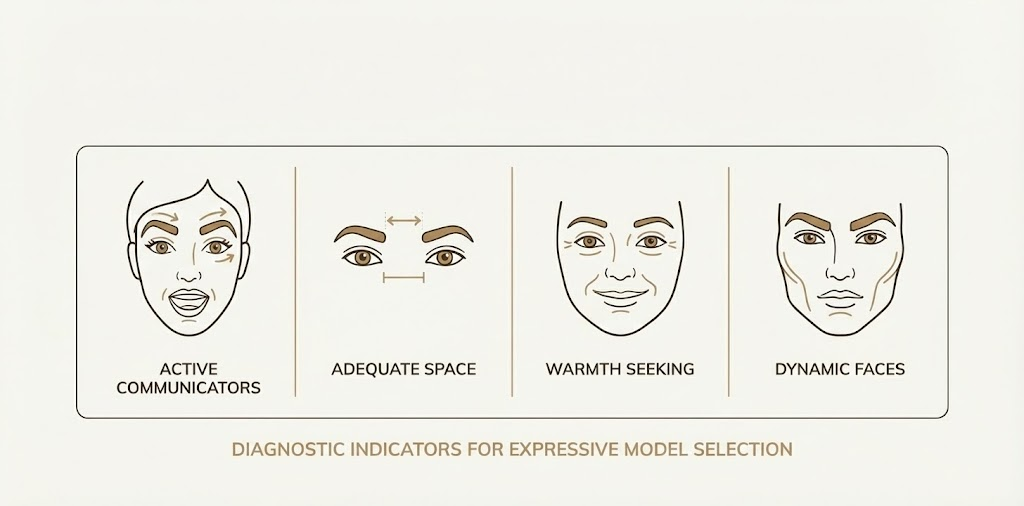
The Expressive model is diagnostically indicated when the client naturally uses their brows to communicate. These are clients who raise their brows when asking questions, furrow when concentrating, and animate their upper face during conversation. The model supports rather than restricts this natural movement pattern.
Adequate Intercanthal Space
Because Expressive concentrates weight at the medial zone, the face must have adequate space to receive this emphasis without appearing cramped or heavy. Clients with narrow-set eyes or limited intercanthal distance may find medial weight overwhelming. The diagnosis includes spatial assessment.
Warmth-Seeking Presentations
Some clients desire results that read as approachable, warm, or emotionally engaged. The Expressive model delivers this quality through its communicative structure. The weighted bulb creates a sense of presence and attention that softer or more neutral models cannot achieve.
Dynamic Facial Architecture
Faces with strong bone structure and active musculature support Expressive execution well. The model's emphasis on communication requires a facial canvas capable of expression. Static or low-mobility faces may not activate the Expressive brow's full potential.
How the Model Is Worn
In daily wear, the Expressive brow presents as engaged and present. It does not read as heavy or stern — it reads as attentive and communicative. This distinction requires understanding the client's natural expression patterns and calibrating the medial weight accordingly.
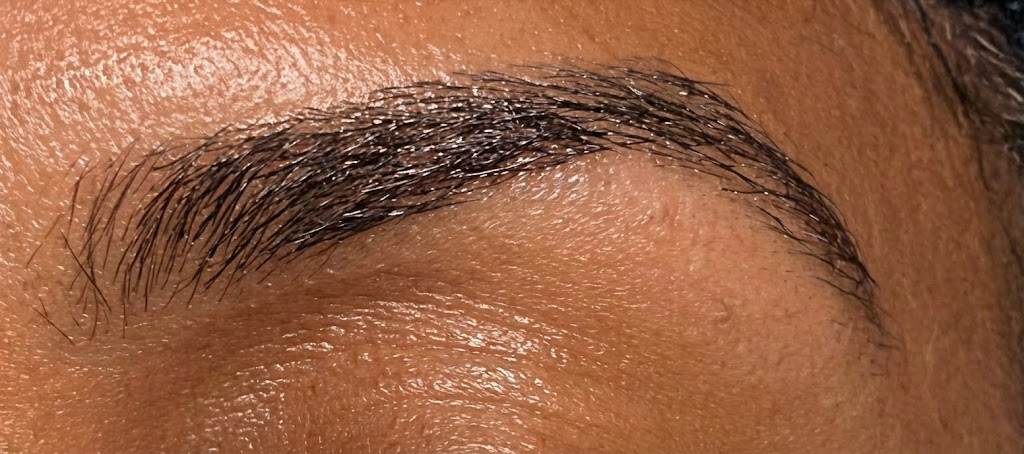
Expression behaviour is the defining consideration for Expressive. The medial zone must participate actively when the client animates. When they raise their brows in surprise or question, the bulb should lift with expressive energy. When they furrow in concentration, the medial density should create visible engagement. The tail follows this movement rather than initiating its own.
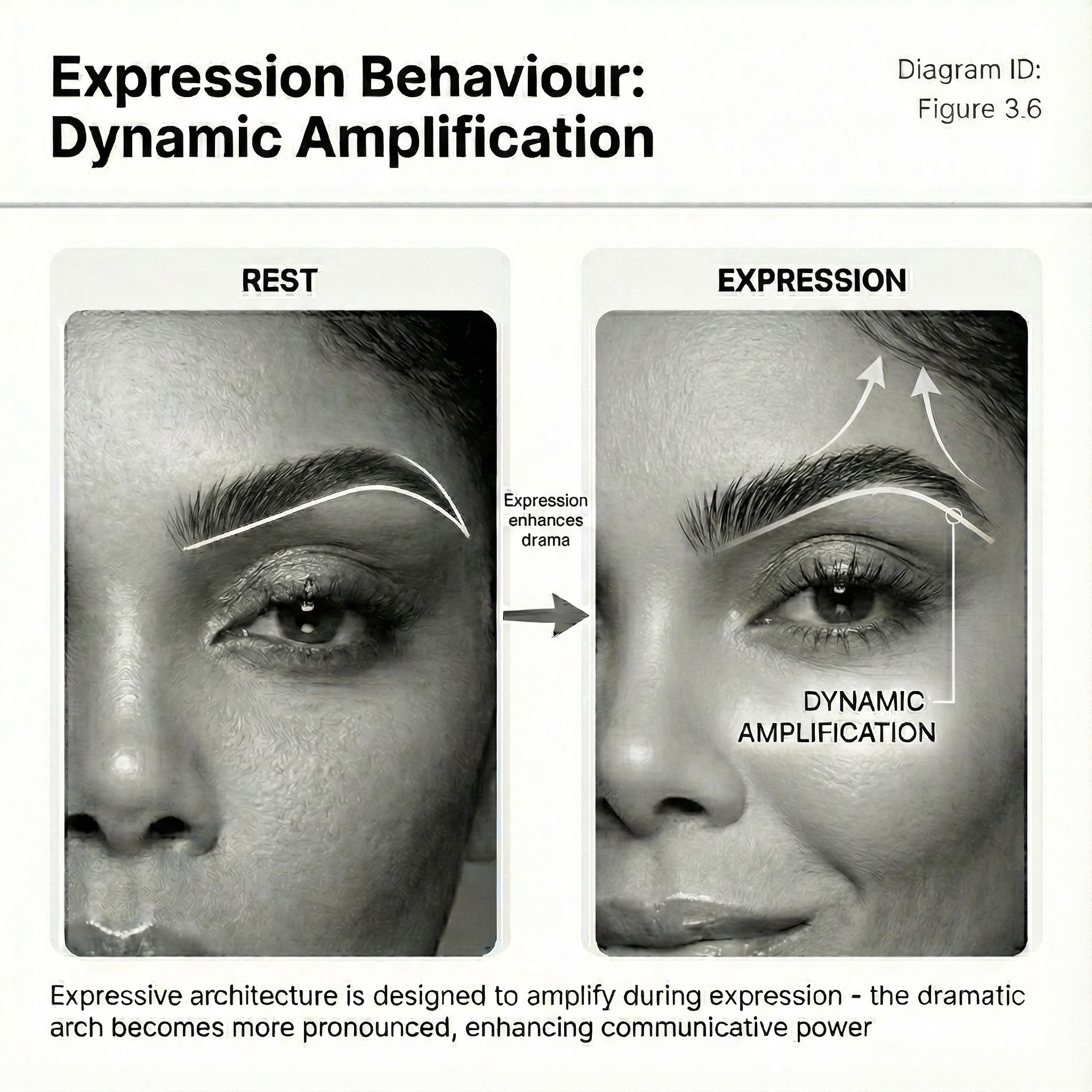
Rest state shows the characteristic medial weight. The brow appears present and attentive even without active expression. This baseline communicative quality is what distinguishes Expressive from models that require animation to reveal their character.
This is why Expressive requires client alignment. The model's communicative structure must match the client's natural expression style. Clients who prefer neutral or understated brows will find Expressive weight uncomfortable. Clients who naturally animate will find it liberating.
Understanding Variations
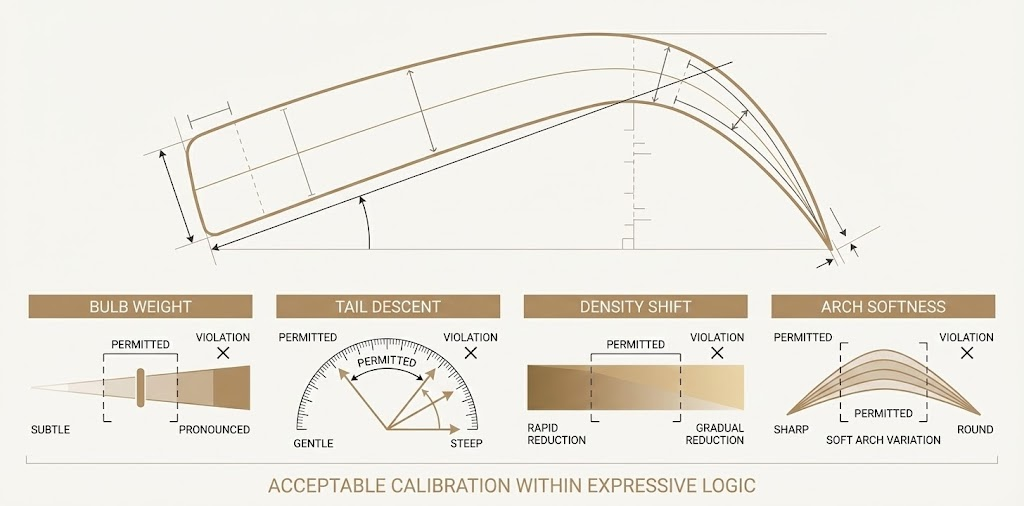
Within the Expressive model, calibration responds to the degree of communicative emphasis required and the facial context receiving it. These variations maintain the model's core logic while adapting to individual presentations.
Bulb Weight Modulation
The degree of medial emphasis can be calibrated to the client's communication style and facial proportions. More active communicators may receive increased bulb weight. Those seeking subtle warmth may receive moderated emphasis. The bulb remains the anchor, but its intensity varies.
Tail Angle from Arch
The tail's trajectory from the arch controls the overall mood of the result. A steeper angle creates more dramatic release. A gentler angle maintains connection between the communicative bulb and the resolving tail. In Expressive execution, the tail may sit slightly below the head baseline where the anatomy supports it, but this departure from the standard rule requires diagnostic justification. Without it, the result reads as drooping rather than expressive.
Density Redistribution
While the model maintains front-loaded density as a principle, the gradient of reduction through the body can be calibrated. Rapid reduction creates more contrast between bulb and tail. Gradual reduction maintains visual connection across the entire brow. Both preserve the communicative emphasis.
Transitioning Between Models
Understanding Expressive in relation to other models clarifies when to select it and when alternatives serve better.
From Classic to Expressive
The transition introduces medial weight and communicative emphasis. Where Classic maintains even distribution, Expressive front-loads density at the bulb. Where Classic's tail resolves with gradual transition, Expressive's tail follows as a release from medial energy.
From Soft Harmony to Expressive
Both models share an emphasis on flow and integration with facial movement. The transition adds deliberate medial weight and communicative intent. Soft Harmony integrates; Expressive communicates. The difference is one of purpose more than structure.
Caution: Expressive and Elevated
These models operate on conflicting logic. Elevated builds toward an apex event in the arch zone. Expressive anchors at the medial zone and releases through the tail. Attempting to combine both creates structural confusion — a brow that neither communicates effectively nor provides clean architectural lift. Choose one logic and execute it fully.
Expressive is a communication tool. It celebrates the brow's role in facial expression for clients who naturally animate through their upper face. When the client alignment exists, the result appears authentic and enhancing. When alignment is absent, the result appears heavy and disconnected from the face's natural patterns.