Section App. 12: Tinting Logic, Density Control & Layered Colour Theory
Definition
Tinting is the application of semi-permanent colour to brow hair. At the diagnostic level, tinting is not a standalone cosmetic service. It is a tool for controlling perceived density, adjusting visual weight across zones, and creating the illusion of fullness where hair is present but insufficient.
Layered colour theory describes how multiple colour applications (tint on natural hair, pigment in the skin from PMU, and the client's own hair colour) interact to produce the final visual result. These layers do not simply add together. They interact with skin undertone, lighting conditions, and each other in ways that must be anticipated during colour planning.
Tinting decisions are density decisions. Every colour choice affects how full the brow appears, how defined its edges read, and how the zones relate to each other visually.
Theory
Tint and Skin Interaction
Tint applied to brow hair also contacts the skin beneath. On some clients, skin staining is minimal and fades within hours. On others, particularly those with dry or exfoliated skin, the tint stains the skin for days, creating a temporary powder-brow effect. This skin staining is not incidental. It can be used deliberately: staining the skin in sparse zones creates immediate density that bridges the gap until the next PMU session, or provides a preview of what fuller brows could look like before the client commits to permanent work.
Skin undertone affects how tint colours appear once applied. A cool-toned tint on warm-undertoned skin can read as ashy or grey. A warm-toned tint on cool-undertoned skin can read as orange or brassy. The practitioner who selects tint colour based solely on the hair colour, without considering the skin beneath and around the brow, risks a result that clashes with the client's natural colouring.
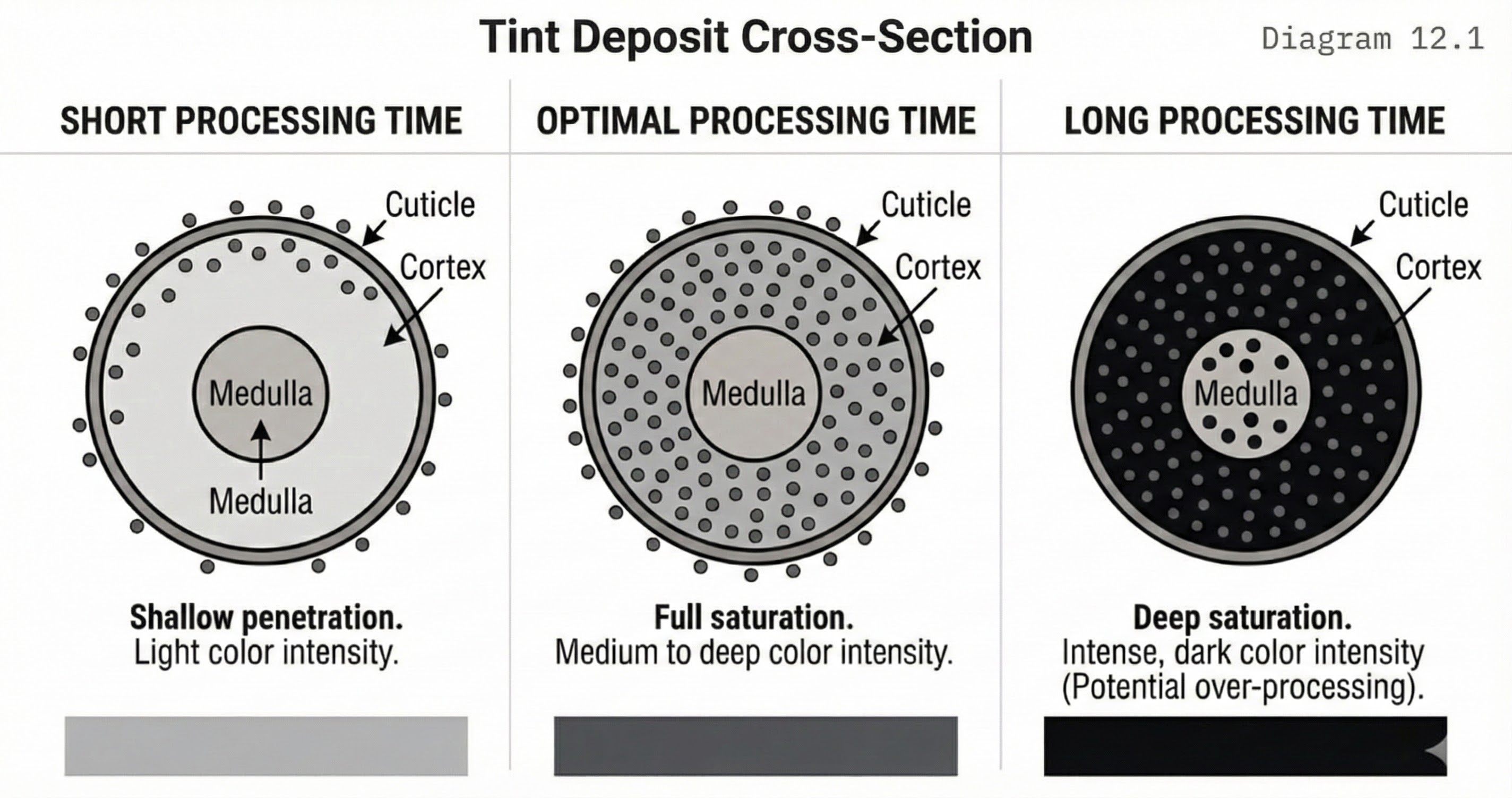
Tint Deposit Cross-Section
Purpose: Show tint penetration into hair structure
A hair strand cross-section showing tint deposit in the cuticle and cortex layers. Penetration depth varies with processing time. Multiple examples show light, moderate, and deep penetration.
Density Illusion
The human eye perceives density based on contrast, not count. A brow with fewer hairs that are all darkened to full saturation can appear denser than a brow with more hairs at a lighter, less contrasted colour. This optical principle is the foundation of tinting as a density tool.
Zone-specific tinting exploits this principle. Darkening the sparse tail hairs to match the denser body zone creates a visual continuity that the actual hair count does not support. Lightening overly dark head hairs softens the transition into the brow and prevents the stamped appearance of a hard, dark inner edge. The practitioner is not simply colouring hair. They are sculpting perceived density across the brow architecture.
Layered Colour Interaction
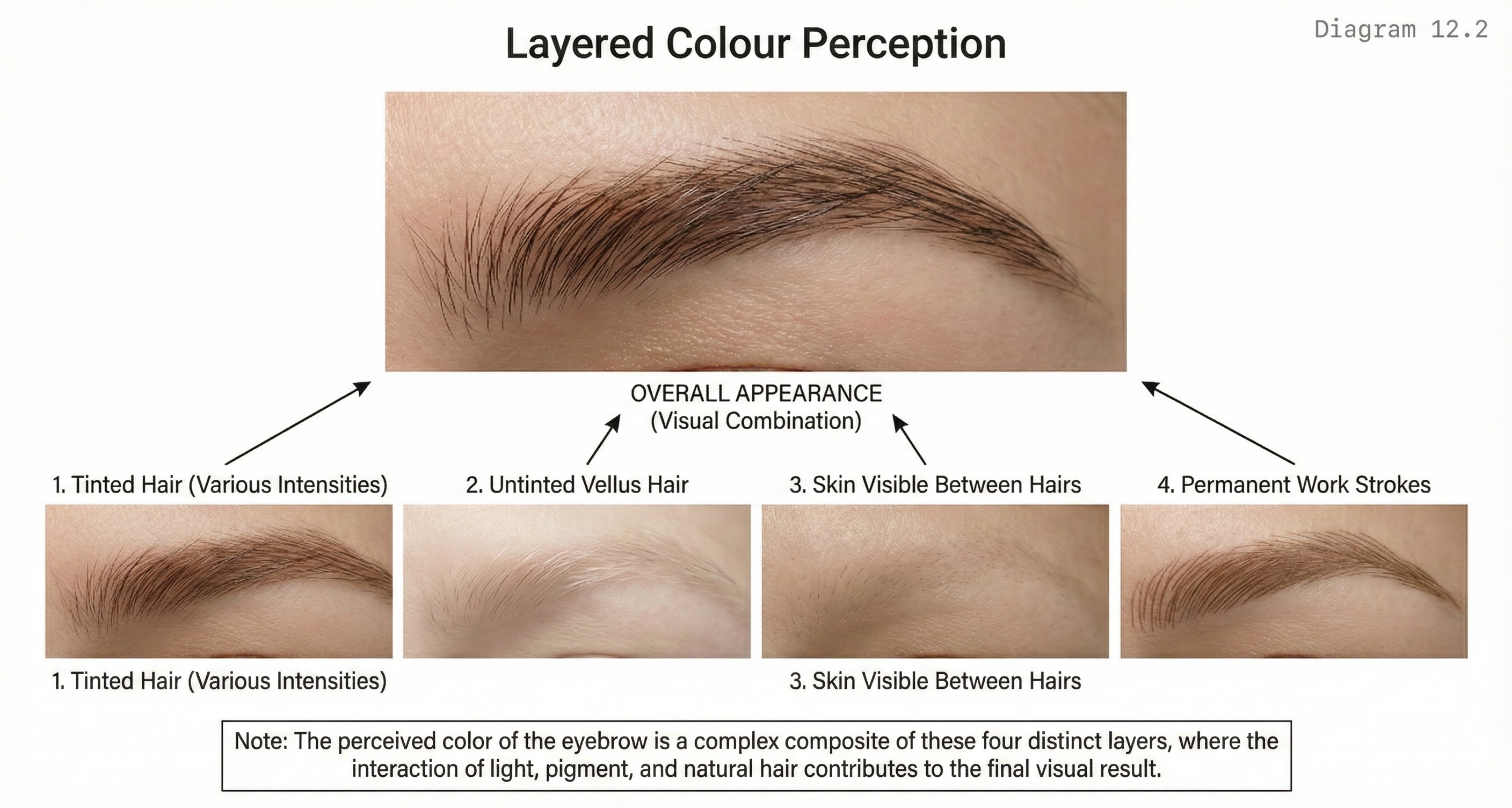
Clients with existing PMU present a layered colour challenge. The pigment in the skin has its own colour, undertone, and opacity. The natural hair has its own colour. The tint adds a third layer. These layers stack differently depending on viewing angle and lighting: under overhead lighting, the skin pigment dominates; in natural side-lighting, the hair colour dominates because the three-dimensional hair catches light differently from the flat skin beneath.
Planning for layered colour requires considering all three layers simultaneously. If the PMU pigment has faded warm, a cool-toned tint on the hair can balance the overall appearance. If the PMU is fresh and saturated, a lighter tint prevents the brow from appearing too heavy. The goal is always a coherent overall colour impression, not optimisation of any single layer in isolation.
Layered Color Perception
Purpose: Illustrate how multiple colour elements create perceived brow colour
A brow diagram showing component color elements: skin undertone, hair color, tint color, and PMU stroke color. How these layers combine to create overall perception is illustrated.
Methodology
Colour Assessment
Assess under consistent, neutral lighting. Note the client's natural hair colour at the root (not the weathered tip, which may be lighter from sun exposure). Note the skin undertone in the brow area specifically, which may differ from the overall facial undertone. If PMU is present, assess its current colour state: has it shifted warm or cool? Has it faded evenly or patchily? These observations inform every subsequent colour decision.
Zone-Differentiated Application
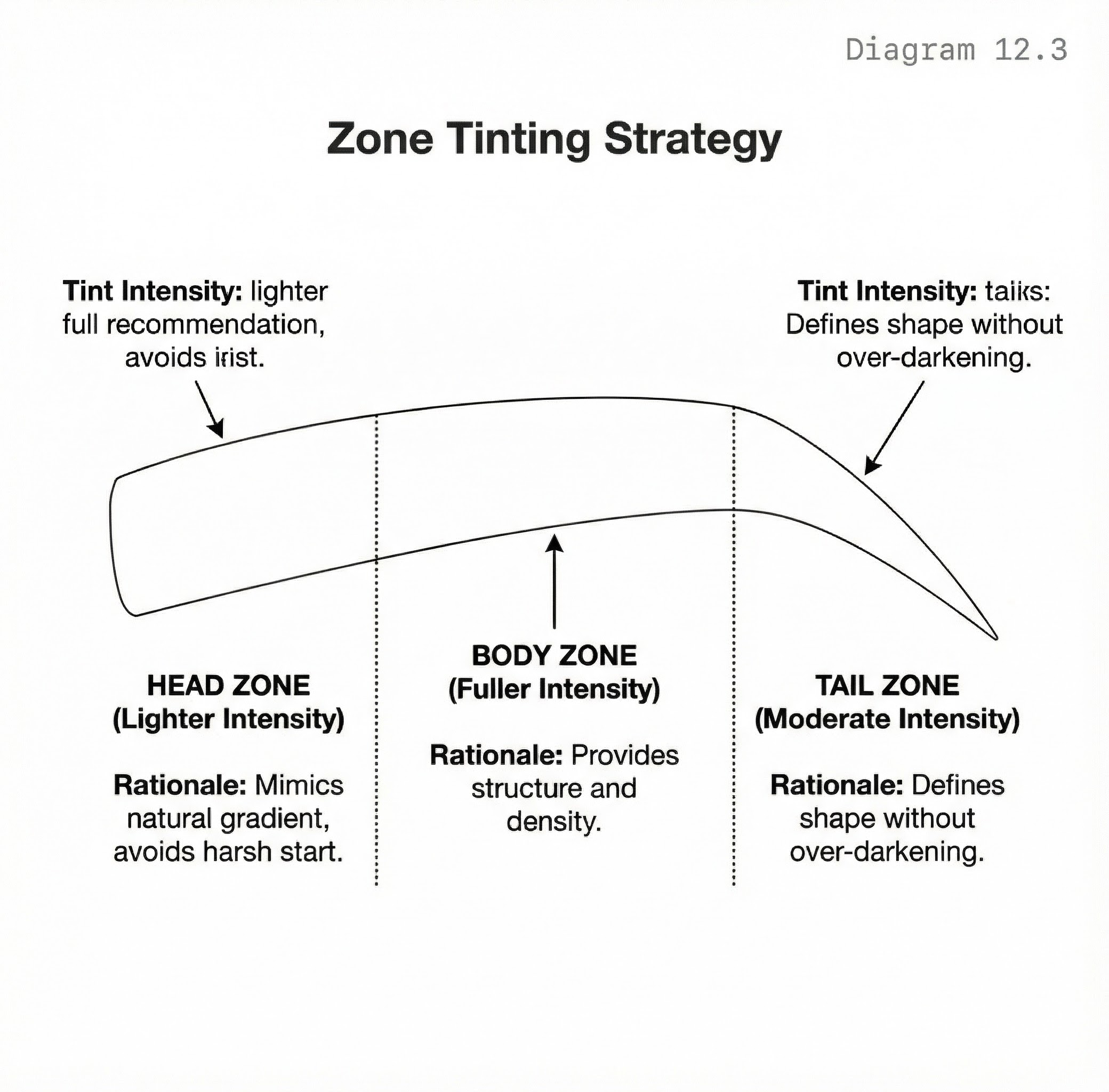
Apply tint with zone awareness. The head zone typically benefits from a lighter application or shorter processing time to maintain the soft, diffused appearance that natural brows exhibit. The body zone can receive full saturation to maximise the density illusion in the brow's structural core. The tail zone requires careful judgement: enough colour to maintain visual continuity, but not so much that a sparse tail with three dark hairs draws attention to the sparseness rather than disguising it.
Processing Control
Processing time is the primary control variable. The same tint formula produces different intensities depending on how long it remains on the hair. Rather than applying and removing tint from the entire brow at once, zone-differentiated processing applies tint to the body zone first, then extends to the head and tail at staggered intervals, creating natural-looking variation in a single application session.
Zone Tinting Strategy
Purpose: Guide zone-specific tint application
A brow divided into zones with tint intensity recommendations for each: lighter at head, moderate through body, adjusted at tail based on desired outcome.
Techniques
Zone Differentiation
Apply tint to the body and arch zones first at full concentration. After the target processing time for maximum intensity (typically 5 to 8 minutes depending on the product), extend to the head with a diluted mix or for a shorter duration. Apply to the tail last, for the shortest duration, unless the tail is the sparse zone requiring maximum colour support. Adjust the sequence to the specific client's density distribution.
Hair Selection
Not every hair needs the same treatment. Grey hairs are resistant to tint and may require pre-softening or a different formulation to accept colour. Fine vellus hairs at the brow periphery accept tint readily and, once coloured, can extend the apparent brow boundary, creating a softer edge. The practitioner who applies tint uniformly to all hairs misses the opportunity to use selective colouring as a shaping tool.
Colour Mixing
Rarely does a single tint shade match the client's needs perfectly. Mixing allows precise colour targeting. A warm brown can be cooled with a small addition of ash; a neutral can be warmed with a touch of auburn. When working with clients who have existing PMU, mix the tint to complement the pigment colour rather than matching the natural hair. The visual result is the combination of all layers, not any single one.
Professional Notes
Tint fades. Depending on the product, hair porosity, and the client's skincare routine, tint typically lasts two to six weeks. Clients using retinoids or chemical exfoliants on their forehead will lose skin staining faster. Those who swim regularly may find hair tint fading sooner. Set expectations accordingly and recommend maintenance intervals based on the individual client's fade rate.
Always perform a patch test. Tint allergies, while uncommon, can be severe. A negative patch test does not guarantee future tolerance (sensitisation can develop over time), but it is the minimum standard of care. Document the test and the result.
Common Mistakes
Uniform application across all zones. Applying the same colour at the same intensity to the entire brow produces an unnatural, monochromatic appearance. Natural brows exhibit colour variation. Tinting should enhance that variation, not eliminate it.
Ignoring skin undertone. Selecting tint based only on hair colour produces results that look correct on the hair but wrong against the skin. The brow is always seen against the skin. Colour must work with both.
Over-darkening sparse areas. The instinct is to make sparse hairs as dark as possible to maximise their visual impact. But three very dark hairs in a sparse zone draw attention to the gaps between them. A slightly lighter shade that blends with skin staining often creates a more convincing density illusion.
Expert Insights
Advanced practitioners use tinting as a consultation tool. Showing a client what their brows look like with enhanced colour and density, before committing to permanent work, builds confidence in the design plan and manages expectations. A well-executed tint appointment can be the most effective sales tool for PMU services, because the client sees the potential in real time on their own face.
Colour is subjective, context-dependent, and changes under different lighting. Assess the result under the lighting conditions the client actually lives in, not just under your studio lights. Step to a window. Check in warm and cool light. The colour that looks perfect under your ring light may read entirely differently in daylight.
Practical Application
Before tinting, document the client's natural colour, skin undertone, and any existing PMU colour state. Record your tint selection, mixing ratios, and zone-specific processing times. After the appointment, photograph the result under consistent lighting. At the client's next visit, note how the tint has faded and adjust your approach accordingly. This documentation builds your personal colour reference library for different hair types, skin tones, and product combinations.